
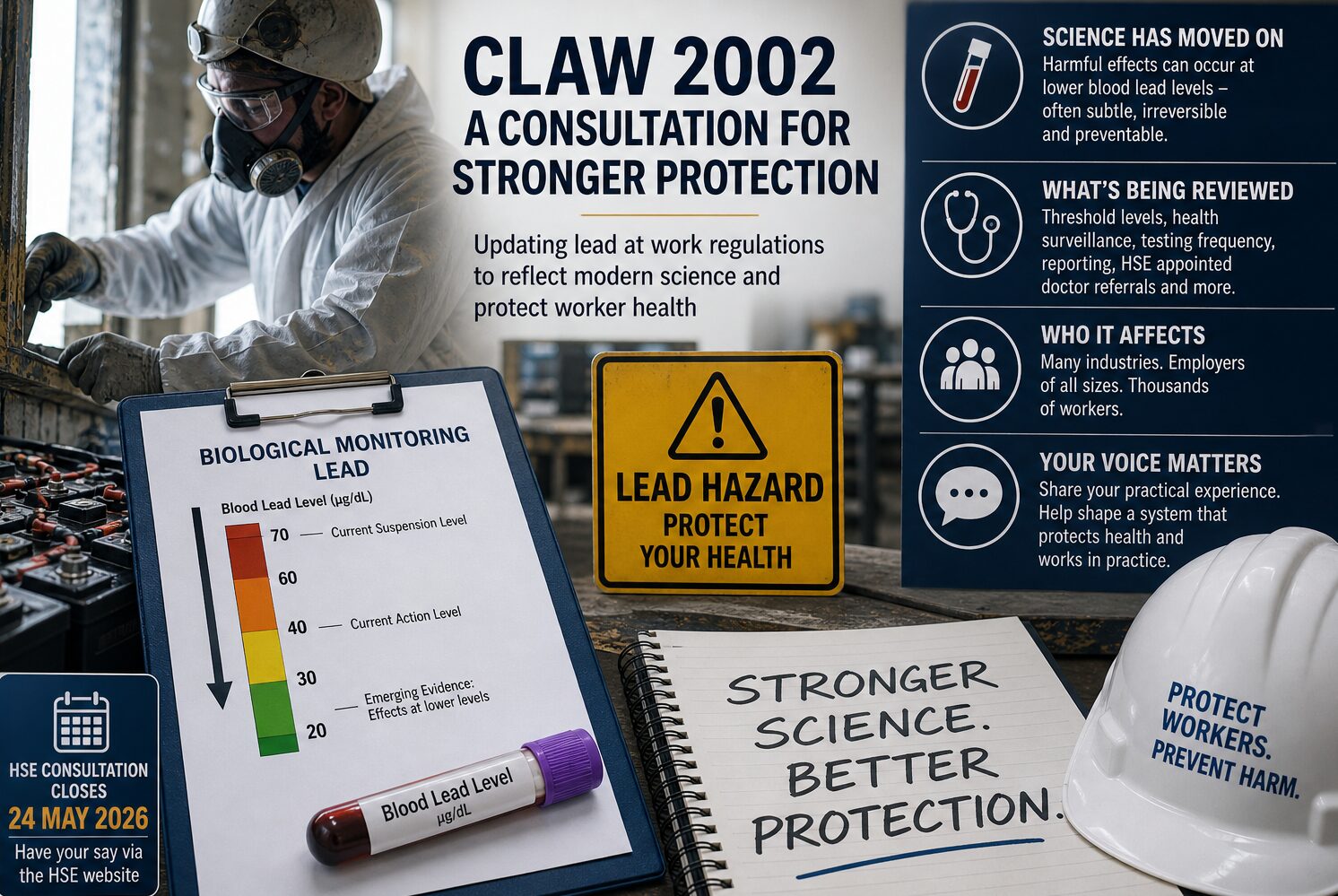
The Control of Lead at Work Regulations 2002 have served as the cornerstone of occupational health protection against lead exposure in Great Britain for over two decades. They set the framework for biological monitoring, suspension levels, medical surveillance, and employer duties that thousands of businesses and workers rely on, but the evidence around lead exposure has moved considerably since 2002.
The Health and Safety Executive’s consultation on CLAW is a direct response to that shift. The science now indicates that harmful health effects can occur at blood lead levels well below the thresholds the existing regulations were built around. These aren’t always dramatic, acute effects. The health effects are often irreversible. Prevention, not treatment, is the only meaningful response.
What the consultation is actually asking?
At its heart, the HSE consultation asks whether the existing biological monitoring threshold levels (the points at which action and suspension are triggered) still reflect the best available evidence. The short answer, based on the scientific review driving this process, is that they may not.
However, the conversation is wider than simply where new numbers should sit. The whole system around those numbers matters too: how health surveillance is carried out, how frequently lead medicals are conducted, how results are reported, what happens when a worker is referred to an HSE appointed doctor, and how the framework can be made more proportionate and effective for the range of industries and contexts in which lead exposure occurs.
Under current CLAW requirements, workers whose blood lead levels reach certain thresholds must be seen by an HSE appointed doctor . How that pathway functions, the referral triggers that activate it, and the guidance available to employers navigating it are all areas the consultation touches on. Any revision to threshold levels has direct implications for when and how often workers enter that process.
This is a genuine opportunity to redesign not just the thresholds but the infrastructure around them.
Who this affects and who should engage?
Lead exposure at work is not confined to one industry. It spans lead acid battery manufacturing and recycling, construction and demolition (particularly in older buildings where lead paint and pipework remain common), ammunition and firearms, pottery and ceramics, stained glass work, radiator repair, and parts of the printing and cable industries.
Across all of these sectors, the practical delivery of occupational health and medical surveillance varies enormously. Large employers may have embedded occupational health teams conducting regular lead medicals and tracking biological monitoring data over time. Smaller businesses often rely on external providers, and may find the requirements around health surveillance and HSE appointed doctor referrals harder to navigate without dedicated resource.
Occupational health professionals, hygienists, safety managers, and trade unions across all of these sectors have practical knowledge that no regulator can fully replicate from the outside. The consultation process works best when it draws on that real-world experience and the ground-level understanding of what effective, proportionate medical surveillance looks like in practice, and where current requirements create genuine burden or leave gaps.
Why the timing matters?
Occupational health regulation rarely gets a full review. When it does, the outcomes tend to endure for a generation. Getting CLAW right now will determine the level of protection available to the UK workforce for years to come.
The HSE consultation closes on 24 May 2026. Responses can be submitted through the HSE website:
Whether you’re an employer, an occupational health professional, a safety representative, or a worker in a lead-using industry, this is one of those moments where engagement translates directly into better outcomes.


