
The latest analysis from the Office for National Statistics should give every UK employer pause for thought. Healthy life expectancy in the UK is declining, and the implications are no longer theoretical as they are increasingly visible within the workforce.
Over the past decade, healthy life expectancy has fallen to just under 61 years. In most areas, individuals begin to experience a deterioration in health before they reach state pension age. This contrasts with some other high-income countries, where sustained investment in prevention has led to improvements rather than decline.
For employers, this is not simply a population-level concern. It is translating into real challenges around attendance, performance, and long-term workforce sustainability.
What Does This Mean for Employees and the Workplace?
At the same time as health is declining earlier, people are expected to work for longer. This creates a tension that is now a routine feature of working life.
From an occupational health perspective, this often presents as employees who remain in work while managing chronic conditions, reduced physical capacity, or persistent fatigue. These are not always cases of absence, but they can significantly affect performance and wellbeing.
Line managers are increasingly required to make decisions about fitness for work, often in complex situations where the right course of action is not immediately clear.
What Are Employers Legally Required to Do?
The removal of the default retirement age in 2011 changed the landscape significantly. Employers must now manage an ageing workforce within the framework of the Equality Act 2010, where both age and disability are protected characteristics.
This means that decisions relating to an employee’s ability to remain in work must be fair, evidence-based, and consistent. Employers are also required to consider reasonable adjustments where appropriate.
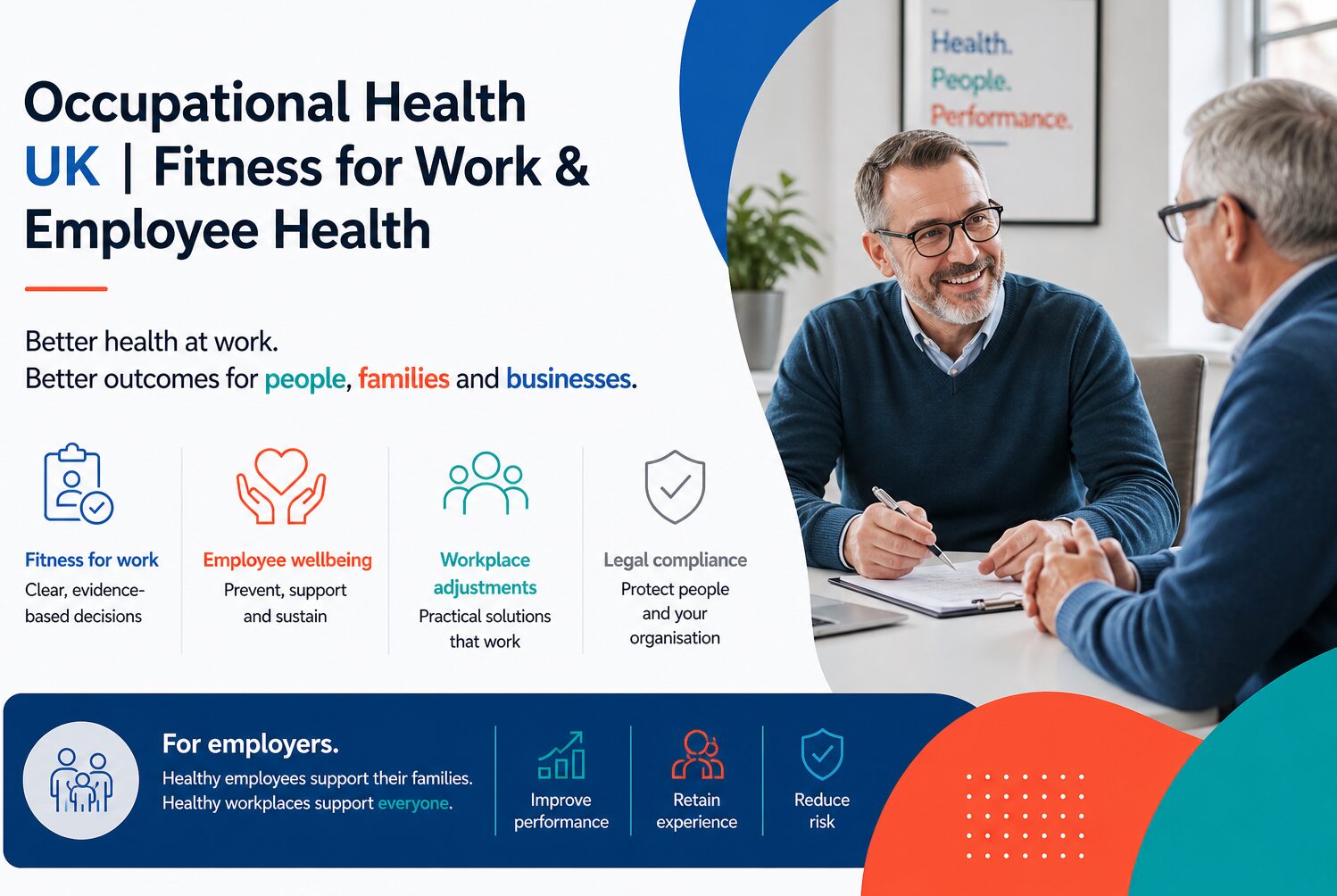
In this context, input from an occupational health physician or adviser is often essential. It provides an objective, clinical basis for decision-making and helps ensure that organisations meet both their legal obligations and their duty of care.
How Can Occupational Health Support Fitness for Work Decisions?
One of the central roles of occupational health is to provide clarity in situations where health and work intersect.
A structured fitness for work assessment does more than determine whether someone is fit or unfit. It explores how health conditions interact with job demands and what adjustments may enable an employee to continue working safely and effectively.
This might involve temporary modifications, phased returns, or longer-term adjustments. The aim is not simply to manage risk, but to support sustainable work participation wherever possible.
Without this input, organisations may rely on assumption or incomplete information, which can lead to inconsistent decisions and avoidable outcomes.
Should Employers Still Focus on Managing Sickness Absence?
Managing sickness absence remains important, but it is no longer sufficient on its own.
More effective organisations are shifting their focus towards prevention. Rather than engaging occupational health only once a problem has escalated, they are using it earlier in the process.
Early occupational health referrals allow emerging issues to be addressed before they lead to prolonged absence. Over time, this approach reduces disruption and supports better outcomes for both the employee and the organisation.
Health surveillance also continues to play a key role in identifying risks early, particularly in higher-risk environments.
What Are the Business Benefits of a Proactive Occupational Health Strategy?
Employers who take a proactive approach to occupational health are already seeing measurable benefits. Absence is better controlled, but more importantly, it is often prevented.
There is also a clear impact on retention. Employees who feel supported are more likely to remain in work, even when managing health conditions. This allows organisations to retain experience and reduce the costs associated with recruitment and turnover.
In a competitive labour market, this is an operational advantage and also a strategic one.
Is Occupational Health Now a Strategic Priority for Employers?
The decline in healthy life expectancy is unlikely to reverse quickly without wider systemic change. In the meantime, employers are managing its consequences in real time.
Those who continue to treat occupational health as a reactive or compliance-driven function may find themselves under increasing pressure. Those who integrate it into their broader business strategy are better positioned to build resilient and sustainable workforces.


